
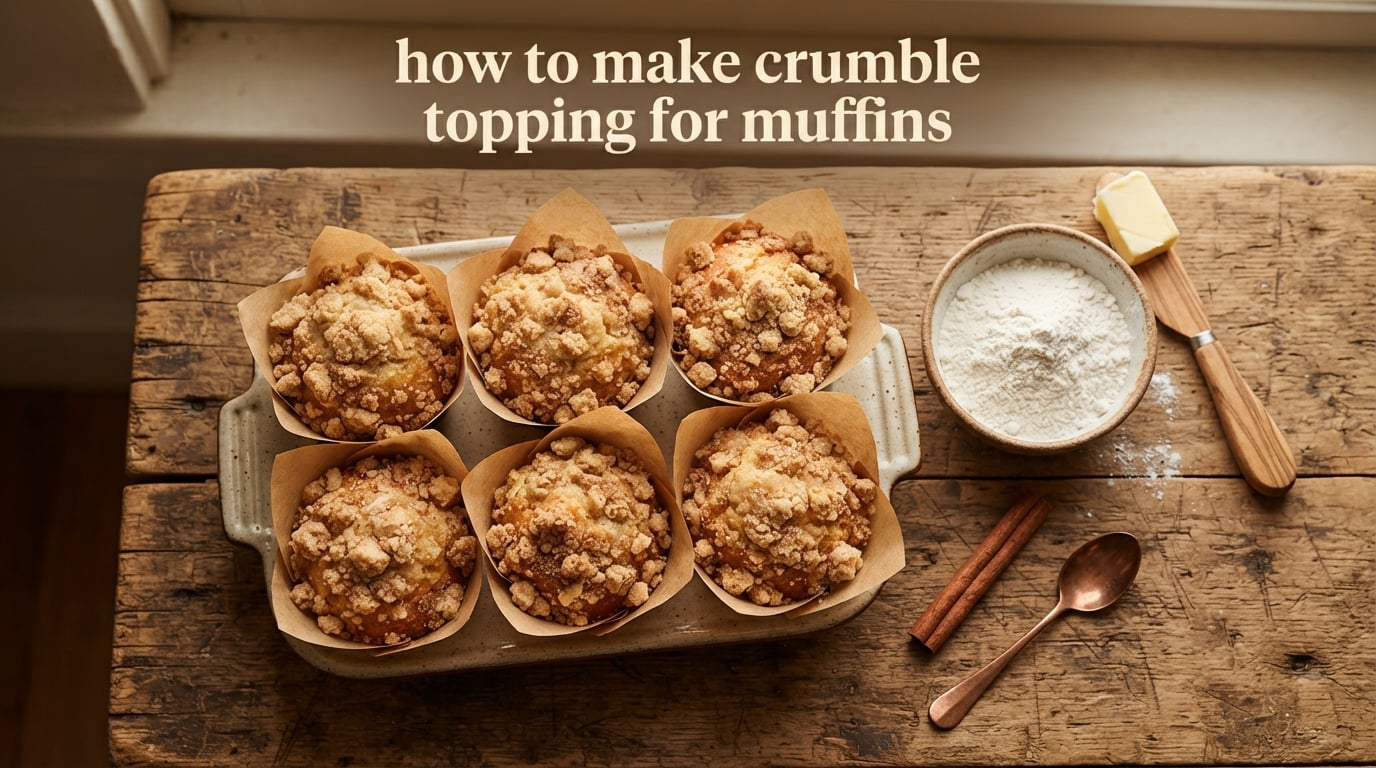
If you have ever pulled a golden muffin out of the oven only to find a sad, flat lid instead of that bakery-style crunch, you already know the problem: muffin crumb topping is the difference between a good muffin and a great one. I have been baking muffins for years, and I can tell you that a well-made streusel topping takes about ten minutes to throw together and instantly upgrades everything from blueberry to coffee cake.
In this guide, I am going to walk you through exactly how to make crumble topping for muffins that stays crunchy, holds its shape, and tastes like the kind you get at a fancy bakery. We will cover the basic ingredient ratio, both the cold-butter and melted-butter methods, why crumble sometimes melts into the batter, and how to fix that for good. By the end, you will have a recipe you can mix by memory.
Table of Contents
- What Is Crumble Topping (and What Makes It Crunchy)
- What Is Crumb Topping Made Of: Ingredients and Ratios
- How to Make Crumble Topping for Muffins: Step-by-Step
- Why Crumble Topping Melts or Sinks (and How to Fix It)
- Crumble Topping Variations and Add-Ins
- Frequently Asked Questions
- Final Thoughts on Making Crumble Topping
What Is Crumble Topping (and What Makes It Crunchy)
Crumble topping is a mixture of flour, sugar, and fat that is mixed until it forms coarse, buttery crumbs and then baked on top of muffins, quick breads, coffee cakes, or fruit crisps. When it hits the heat of the oven, the butter melts, the sugar caramelizes, and the flour crisps up into the kind of crunchy, golden lid that makes a muffin feel bakery-worthy.
The secret to crunchy crumble is simple in principle: keep the fat cold enough to form clumps, and use enough sugar to caramelize without burning. Most bakers rely on a basic ratio of 1 part fat to 2 parts flour to 1 part sugar by volume, though you can adjust it depending on how buttery or sweet you want the final result. I always start with this ratio and tweak from there.
If you are wondering how to make crumble topping for muffins without it melting into the batter, the answer comes down to three things: butter temperature, how finely you mix it, and how generously you layer it on. We will get into all of that in the troubleshooting section, but first, let us go over what goes into a classic crumble.
What Is Crumb Topping Made Of: Ingredients and Ratios
The basic crumble mix is flour, butter, sugar, and a pinch of salt. That is it. Cinnamon is optional but very common in muffins, and oats or chopped nuts can be added for texture. The most important decision you will make is what type of flour and butter to use, because each one changes the final crumb.
All-purpose flour is the default choice for most bakers and what I reach for in my own kitchen. It has enough protein (around 10 to 12 percent) to hold the topping together as clumps rather than dust. Cake flour will give you a more tender, melt-in-your-mouth texture, but the crumbs tend to be smaller and the topping more delicate, which is why some bakers on baking-forums.com report structural issues when using it on muffins.
Butter is the second key choice. You can use it cold and cubed, cold and grated, or melted. Cold butter produces large, distinct crumbs that stay crunchy on top. Melted butter produces a more uniform, sandy crumble that bakes into a slightly chewier layer. Both work, and I will show you both methods in the next section.
Sugar is the third pillar. You can use all granulated sugar for a cleaner sweetness, all brown sugar for a deeper molasses flavor, or a mix. Brown sugar adds moisture and a slight chew, while granulated sugar gives you maximum crunch. I usually go with half-and-half.
The 4-Ingredient Base Recipe (Makes Enough for 12 Muffins)
- 1 cup (125 g) all-purpose flour
- 1/2 cup (100 g) packed brown sugar
- 1/4 cup (50 g) granulated sugar
- 1/2 cup (113 g) unsalted butter, cold or melted depending on method
- 1/2 teaspoon ground cinnamon (optional but recommended)
- 1/4 teaspoon fine salt
That is the basic crumble mix. From here, you can add oats, chopped pecans, a splash of vanilla, or even a pinch of cardamom depending on what flavor muffin you are baking. The flexibility is one of the best things about this recipe.
Flour, Sugar, and Butter Substitutions
For gluten-free crumble topping, swap the all-purpose flour for a 1:1 gluten-free baking flour. Bob’s Red Mill and King Arthur both make blends that work well. Add an extra tablespoon of butter because gluten-free flours tend to be thirstier.
For vegan crumble topping, use cold vegan butter sticks (not tub margarine, which is too soft). Miyoko’s and Country Crock plant butter both work. Coconut oil can work in a pinch but produces a more sandy texture.
For coconut sugar or maple sugar, substitute them 1:1 for the brown sugar to get a deeper, almost caramel-like flavor without changing the texture much.
How to Make Crumble Topping for Muffins: Step-by-Step
Now for the part you actually came here for: the mixing method. I am going to show you both the cold-butter method (which gives bigger crumbs) and the melted-butter method (which is faster and more forgiving for beginners). Pick the one that fits the texture you want.
Method 1: Cold Butter Crumble (Big, Crunchy Clumps)
Step 1: Chill your butter. Cut your butter into small cubes, about half an inch each, and pop them back in the fridge while you measure everything else. I usually cube the butter first thing so it has time to firm up by the time I am ready to mix.
Step 2: Combine dry ingredients. In a medium bowl, whisk together the flour, both sugars, salt, and cinnamon until evenly distributed. Breaking up any brown sugar clumps with your fingers at this stage prevents lumps in your final topping.
Step 3: Cut in the butter. Add the cold butter cubes to the dry mixture. Use a pastry cutter, two forks, or your fingertips to press and rub the butter into the flour. The goal is irregular clumps ranging from pea-size to marble-size, with some smaller sandy bits mixed in. Do not overwork it into a uniform dough.
Step 4: Chill before using. This is the secret most home bakers skip. Place the bowl in the freezer for 10 to 15 minutes before topping your muffins. Cold clumps hold their shape better in the oven and resist sinking into the batter.
Step 5: Sprinkle generously on top. Drop heaping tablespoons of the chilled crumble over each muffin, covering the surface completely. Press down very gently so the crumbs adhere but do not get compressed. Aim for a layer about half an inch thick.
Step 6: Bake. Bake the muffins according to your recipe, usually 18 to 22 minutes at 375 F to 400 F, until the topping is golden brown and a toothpick inserted into the muffin part comes out clean.
Method 2: Melted Butter Crumble (Faster, More Uniform)
Step 1: Melt the butter. Melt the butter in a small saucepan or microwave-safe bowl and let it cool for 2 minutes. You want it warm, not piping hot, so it does not cook the flour when combined.
Step 2: Whisk dry ingredients. In a separate bowl, whisk together flour, both sugars, salt, and cinnamon just like in Method 1.
Step 3: Pour and stir. Pour the melted butter over the dry mixture and stir with a fork until the mixture looks like wet sand with small clumps. This takes about 30 seconds of stirring.
Step 4: Sprinkle and bake. Sprinkle the crumble over your muffins right away. The melted-butter version does not need chilling, and it bakes into a slightly chewier, more uniform lid. It is the version most muffin shops use because it is so fast.
Tools You Can Use
A pastry cutter is the classic tool, but it is not the only one. Two forks work just as well for small batches and many home bakers report no difference in results. Your clean fingertips are also fine, especially if you want to feel when the butter is properly incorporated. A food processor works if you pulse just 4 to 5 times, but be careful: it is very easy to over-process and end up with dough instead of crumbs.
Why Crumble Topping Melts or Sinks (and How to Fix It)
This is the most common complaint I see from home bakers, and I have struggled with it too. You sprinkle beautiful clumps on top of your muffins, and 20 minutes later the topping has melted into a thin, sugary crust that disappeared into the muffin. Here is what is going on, and how to fix it.
The main culprit is butter temperature. When butter is too warm going into the oven, it melts immediately and seeps into the muffin batter rather than staying on top. The fix is simple: chill your mixed crumble in the freezer for 10 to 15 minutes before topping the muffins. This was a tip that came up repeatedly in the baking-forums.com thread on streusel topping, and it is the single biggest difference I have made in my own muffins.
The second cause is overmixing. If you work the butter into the flour until it looks like cookie dough, you have lost the clumps. Without clumps, there is nothing to hold the topping together on the surface of the muffin. Stop mixing while you still see visible pieces of butter and irregular chunks.
The third cause is a too-warm batter. If your muffin batter has been sitting out while you mixed the topping, the surface is too soft to support the crumbs. Refrigerate the filled muffin tin for 10 minutes before adding the topping, especially in a warm kitchen.
The Secret to Good Crumble (PAA Direct Answer)
The secret to good crumble is cold butter, an uneven texture, and a generous hand when sprinkling. Cold butter holds its shape in the oven long enough for the crumbs to set before they melt. An uneven texture means you have a mix of small bits and large clumps, which creates crunch in every bite. And a generous layer (about half an inch thick) ensures that even if some sinks, plenty stays on top.
One more thing: do not press the topping into the batter. I made this mistake for years. A gentle touch is enough to make the crumbs stick during baking. Pressing them down compresses the clumps and gives them less surface area to crisp up.
Cold Butter vs Melted Butter: Texture Comparison
- Cold butter method: Larger, irregular crumbs, crunchier texture, holds shape best, requires chilling.
- Melted butter method: Smaller, sandy crumbs, chewier texture, easier for beginners, no chilling required.
If you are baking for a special occasion and want that wow-factor bakery look, go with cold butter. If you are making weekday muffins and just want something tasty, melted butter is honestly the better choice. Both are real crumb topping, just different styles.
Crumble Topping Variations and Add-Ins
Once you have the basic technique down, you can change the flavor profile of your crumble just by swapping a few ingredients. Here are the variations I use most often.
Oatmeal Streusel
Replace 1/4 cup of the flour with 1/4 cup of old-fashioned rolled oats. The oats add a nutty flavor and a heartier crunch that pairs especially well with apple, banana, and pumpkin muffins. Quick oats work too but give a softer texture.
Brown Butter Crumble
Brown the butter before using it in the melted-butter method. Cook the butter in a light-colored pan over medium heat until it turns golden and smells nutty, about 4 minutes. Let it cool slightly, then proceed. Brown butter crumble tastes like toffee and is amazing on vanilla, pecan, or maple muffins.
Pecan or Walnut Crumble
Add 1/3 cup of finely chopped toasted nuts to the dry mixture. Toasting the nuts first (350 F for 6 minutes) deepens the flavor and keeps them crunchy in the oven.
Cinnamon Sugar Crumble
Double the cinnamon to 1 full teaspoon and use all brown sugar. This is the classic bakery muffin top and what most people picture when they think of streusel topping.
Lemon or Orange Zest Crumble
Add 1 tablespoon of finely grated citrus zest to the dry mixture. Citrus zest and crumble on a blueberry or cranberry muffin is one of the best flavor combinations in baking.
Chocolate Chip Crumble
Fold in 1/4 cup of mini chocolate chips after mixing. The chips melt slightly in the oven and create pockets of chocolate crunch that kids go crazy for.
Frequently Asked Questions
How do you make crumble topping?
Combine 1 cup flour, 1/2 cup brown sugar, 1/4 cup granulated sugar, and a pinch of salt. Cut in 1/2 cup cold butter with a pastry cutter or forks until you have irregular clumps ranging from pea-size to marble-size. Chill for 10 minutes, then sprinkle generously on muffins before baking.
What is crumb topping made of?
Crumb topping is made of four base ingredients: flour, sugar, butter, and salt. Most recipes also include cinnamon, and you can add oats, nuts, or citrus zest for variation. The classic ratio is 1 part butter to 2 parts flour to 1 part sugar by volume.
What is the secret to good crumble?
The secret to good crumble is keeping the butter cold, leaving the texture uneven with visible clumps, and using a generous half-inch layer on top of the muffins. Chilling the mixed crumble in the freezer for 10 to 15 minutes before baking prevents it from melting into the batter.
What is the basic crumble mix?
The basic crumble mix is 1 cup all-purpose flour, 1/2 cup brown sugar, 1/4 cup granulated sugar, 1/2 cup cold butter, 1/2 teaspoon cinnamon, and 1/4 teaspoon salt. Mix until you have coarse, uneven crumbs and use about 1 to 2 tablespoons per muffin.
How do I keep crumble topping from sinking into muffins?
Chill the mixed crumble in the freezer for 10 to 15 minutes before sprinkling it on the muffin batter. Cold clumps hold their shape during baking instead of melting into the batter. Avoid pressing the topping down and do not overmix the butter into the flour.
Can you make crumble topping ahead of time?
Yes. Mix the crumble up to 5 days ahead and store it in an airtight container in the fridge, or freeze it for up to 3 months. You can sprinkle it directly on frozen muffins and bake without thawing. Some bakers actually prefer the texture of pre-frozen crumble because the clumps stay even sharper in the oven.
Final Thoughts on Making Crumble Topping
Learning how to make crumble topping for muffins is one of those small kitchen skills that pays you back forever. Once you have made it two or three times, you will not need the recipe card. You will just reach for the flour, butter, and sugar, mix by feel, and end up with that perfect bakery-style crunch every single time.
If you take one thing away from this guide, let it be the chilling step. A 10-minute rest in the freezer is the difference between a topping that stays on top and one that disappears into the muffin. Combine that with cold butter and an uneven, clumpy texture, and you have cracked the code.
I would love to hear how your crumble turns out. Try it on blueberry muffins first, then branch out into apple, banana, or pumpkin. Once you have the basic recipe down, the variations are endless, and every single one is worth baking.