
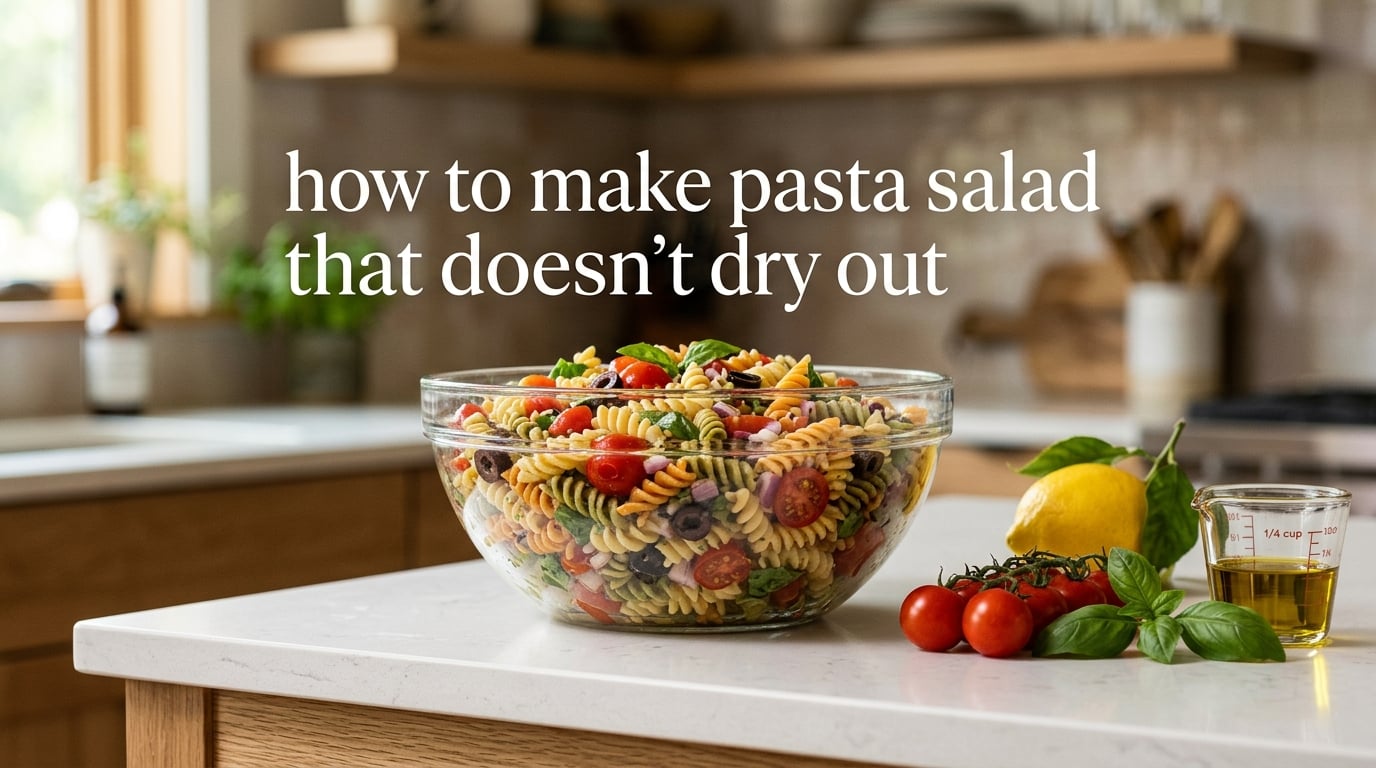
Short answer: dress the pasta twice. Toss about half your dressing into the pasta while it is still warm, let it chill fully, then add the rest plus a splash of reserved pasta water right before you serve it. Pasta salad dries out because surface starch keeps drinking up liquid as it cools and rests, and the second dressing replaces what got absorbed.
That single habit fixes most of the problem, and I want to explain the rest of it properly, because drying out is not a dressing problem or a mayonnaise problem. It is a starch problem, and once you understand how it works the fix stops being guesswork.
I cook pasta salad for a lot of potlucks, picnics and packed lunches, and for years mine looked great in the bowl and turned into a dull, clumping pile of noodles by noon the next day. I tested the same base recipe in roughly thirty batches over a few summers: different cook times, different dressings, oiled and unoiled, rinsed and not, stored in shallow and deep containers. What survived every batch was the same set of behaviors, and they are all here below.
This guide covers why pasta dries out, the five mistakes that cause it, how far to cook the pasta, how to cool and drain it, which dressing type you are actually using, and what to do when the salad is already dry and sitting in front of you. It also covers the opposite failure, the soggy bowl, because fixing dryness badly creates it.
Table of Contents
- Key Tips to Prevent a Dry Pasta Salad
- Why Pasta Salad Dries Out (The Starch Sponge Problem)
- The 5 Mistakes That Dry Out Pasta Salad
- Dress Twice: The Single Biggest Fix
- How Far Under (or Over) Al Dente to Cook Pasta for Salad
- How to Cool and Drain Pasta Without Making It Soggy
- The Olive Oil Barrier Trick
- Mayo-Based vs. Vinaigrette Dressings: Different Fixes
- Which Pasta Shapes Hold the Most Dressing
- How to Stop the Opposite Problem: Soggy, Mushy Pasta Salad
- How to Revive a Dry Pasta Salad
- High-Moisture Mix-Ins That Add Liquid Back
- Make-Ahead and Storage Guide
- Frequently Asked Questions
- How to keep pasta salad from drying out?
- What are the five mistakes to avoid pasta salad?
- How do I keep my pasta from drying out?
- Why is my pasta salad dry?
- How to make pasta salad more moist?
- How to make macaroni salad that doesn’t dry out?
- How do I stop my salad from going soggy?
- What is the secret to a good pasta salad?
- How long can pasta salad stay at room temperature?
- Should the pasta be rinsed in cold water when the cooking is complete for pasta salad?
- Conclusion
Key Tips to Prevent a Dry Pasta Salad
- Dress the pasta twice: half while it is warm, half after it has chilled.
- Hold back 3 to 4 tablespoons of dressing per pound of pasta and add it just before serving.
- Reserve a cup of pasta water before you drain, because its starch is the best rescue liquid there is.
- Cook the pasta slightly past al dente, then test a noodle instead of trusting the package timer.
- Toss the drained pasta with a little olive oil before it goes in the fridge.
- Cool the pasta spread out on a baking sheet, not piled in the pot.
- Add juicy mix-ins such as cherry tomatoes, olives and pickled peppers that release liquid into the bowl.
- For a mayo-based salad, store the extra dressing in a separate jar and pour it on at the table.
Why Pasta Salad Dries Out (The Starch Sponge Problem)
Pasta salad dries out because starch keeps absorbing liquid after you make it. When pasta cooks, surface starch gelatinizes and forms a porous, sponge-like layer on every noodle. That starch is still hungry when the salad hits the fridge, so it keeps pulling moisture out of the dressing and out of the vegetables. It does not stop. The cooling itself makes it worse, because chilled starch firms up and retrogrades, drawing and holding water more aggressively than it does warm.
That means a salad assembled with exactly the right amount of dressing can look perfectly dressed at 7pm and look dry, dull and slightly clumpy at noon the next day. Nobody under-dressed the bowl. The bowl simply drank it.
The other half of the problem is surface area. Spiral and corkscrew shapes have far more exposed starch than tubes, so they absorb noticeably faster and need a heavier hand with dressing and mix-ins. It is the same reason a wide noodle feels thirstier than a small elbow.
The 5 Mistakes That Dry Out Pasta Salad
- Dressing only once, at the end. Any dressing added after the pasta has chilled sits on the surface instead of seasoning the inside of the noodle. Fix: dress half while warm, half after chilling.
- Draining the pasta water away entirely. That cloudy liquid is loaded with the exact starch that makes the noodles so thirsty. Fix: reserve a cup before you drain, and keep a splash back for the final toss.
- Cooling the pasta in a pile. Steam trapped under a mound of noodles condenses back onto them, and they sit in warm moisture until the starch fully sets. Fix: spread the pasta in a single layer on a baking sheet for 10 to 15 minutes.
- Skipping the olive oil coat. Without a light film of oil, the dressing slides off and the noodles touch each other directly, which means more bare starch. Fix: toss the drained pasta with 1 to 2 tablespoons of olive oil before it cools.
- Skipping the second toss. The salad leaves the fridge coated and then travels, sits on a table, and picks up a breeze. Fix: toss again with reserved dressing or pasta water at the moment of serving, not before you leave the house.
There is a sixth habit that quietly causes dryness, and it is a doneness problem rather than a dressing problem: cooking the pasta to exactly al dente and treating that as the goal for salad.
Dress Twice: The Single Biggest Fix
Dressing twice means splitting the dressing into two rounds. Mix roughly half of it into the pasta while the pasta is still warm, then cover and chill the salad fully. Stir in the remaining half, plus a small splash of reserved pasta water, right before serving.
Warm pasta is soft and thirsty, so the first round soaks in and seasons the whole noodle rather than just its surface. The second round lands on a chilled salad that has already absorbed everything it can, so it stays visible and tastes fresh. Cooking forum users converge on the same reasoning, and the Seasoned Advice thread on cooking.stackexchange.com puts it plainly: store the pasta and the extra dressing separately and combine them at the last moment.
For ratios, I work from the pound. A pound of pasta takes about 3 to 4 tablespoons of the first round and the same again for the second, which is roughly half a cup of dressing total for a standard side dish. That is a starting point rather than a rule, because the shape of the pasta and the wetness of your mix-ins both change how thirsty the bowl is.
If you are short on dressing at serving time, the pasta water is the substitute. It is thinner than dressing, so use it sparingly and taste after the first tablespoon.
How Far Under (or Over) Al Dente to Cook Pasta for Salad
Cook the pasta about 1 to 2 minutes longer than the package directions for a pasta salad, and use a doneness test rather than the clock. Recipes disagree on this point, with one camp insisting on stopping at al dente and another advocating for well past it, and both are partly right. The reason for the extra time is the same mechanism that causes dryness: starch retrogradation firms the noodles as they chill, so pasta that is merely al dente hot comes out firm and chalky cold.
Here is the test I use. Pull one noodle a minute or two before the stated time. It should have no chalky white core and should bend without snapping, but still offer slight resistance when you bite it. For salad, aim for the softer end of that window. If the noodle breaks when you bend it, it is already past where you want to be.
Users on r/mealprep go the other direction and recommend slightly undercooking with a vinaigrette, which works well for very short storage windows. For an overnight or potluck salad, the firmer approach holds up better, so treat the extra minute or two as the safer default and adjust down only if you are serving within a couple of hours.
How to Cool and Drain Pasta Without Making It Soggy
Yes, rinse the pasta in cold water when cooking is complete for a salad, but do it briefly and drain it very well. A quick rinse under cold running water stops the carryover cooking that would otherwise keep gelatinizing starch while the pasta sits, and a short shake or a spin in a colander removes the surface water that would otherwise waterlog the bowl. Lifehacker offers the alternative view, laying the drained pasta on a baking sheet to cool, and that works too.
The order matters: rinse, shake dry, toss with olive oil, spread flat, chill. Skipping the dry step is what produces a watery salad, and it is why so many people end up with a bowl that is simultaneously dry on the surface and soupy underneath.
Give the pasta 10 to 15 minutes on the sheet rather than moving it to the fridge while it is still steaming and warm to the touch. Warm pasta goes into the fridge as a loose mound, and the noodles that are touching never get separated properly.
The Olive Oil Barrier Trick
Toss the drained pasta with 1 to 2 tablespoons of olive oil before it cools, and spread it out. The oil forms a thin film that does two jobs: it stops the noodles sticking to each other and to the container, and it gives the dressing something to sit on rather than sliding off a dry starch surface.
A food.com recipe note captures this in a sentence, recommending a small drizzle of extra light olive oil over the noodles before cooling them. Keep the amount small. Too much oil coats the pasta so thoroughly that the dressing tastes thin and the salad feels greasy by the second hour, which defeats the purpose.
Mayo-Based vs. Vinaigrette Dressings: Different Fixes
Mayo-based and vinegar-based dressings dry out for different reasons, so the fix depends on which one is in your bowl. Macaroni salad, the classic potluck dish, is the mayo-based case. A red-flag detail from the forum: mayo-based dressings split and turn watery after sitting with acidic add-ins such as pickles, tomatoes and vinegar, so the same salad can be dry in the noodles and loose in the dressing at the same time.
| Dressing Type | Why It Dries Out | Best Rescue Liquid |
|---|---|---|
| Mayonnaise-based (macaroni salad) | Emulsion splits under acidic mix-ins, so the coating thins and the starch drinks what is left | A spoonful of the reserved dressing, loosened with a teaspoon of reserved pasta water |
| Red wine or balsamic vinaigrette | Acid tightens the pasta surface, and starch keeps pulling water out of an already thin dressing | Reserved pasta water, then more dressing to taste |
| Olive oil vinaigrette | Oil and water separate, so the bowl has less free liquid than it looks like it has | A small splash of pasta water to re-emulsify, whisked with the oil |
| Greek yogurt or cream cheese base | Dairy tightens slightly under acid, and the dressing is absorbed quickly | Cold pasta water stirred in a teaspoon at a time until it coats a spoon |
For a lighter creamy dressing, the most useful trick I found came from a top-ranking thread on r/RealGirlDinner, where a cook blended 30g light cream cheese, 125ml salad dressing and 40g of Greek yogurt directly into the pasta. You get the clinging creaminess that makes a mayo salad work without the heaviness, and the yogurt keeps the dressing from splitting the way plain mayonnaise does next to pickles and tomatoes.
Two rules apply to every dressing type. Cool the pasta fully before it goes into the bowl, because warm pasta melts a mayo-based dressing on contact and dilutes a vinaigrette. And add the acidic mix-ins last where you can, so they do not have hours to sit and pull the emulsion apart.
Which Pasta Shapes Hold the Most Dressing
Ridged and twisted shapes such as rotini, fusilli and radiatori hold the most dressing, because the grooves give the sauce something to grab and they increase the exposed starch surface. Tubes like penne and ziti do reasonably well, especially ridged penne. Short, smooth shapes like elbow macaroni have the least surface area and the least starch exposure, which is one reason macaroni salad stays moist longer but also why it needs a heavier dressing ratio to actually taste seasoned.
Very fine noodles such as angel hair and linguine are the worst choice for a make-ahead salad. They soak up dressing fast, clump, and turn paste-like in a container by the next morning.
This is also a real trade-off, and it is worth naming. Shapes that hold the most dressing are the same shapes that drink the most of it, so the twin-curved and corkscrew salads need the double dressing and the reserved pasta water more than the straight tubes do.
How to Stop the Opposite Problem: Soggy, Mushy Pasta Salad
Overcorrecting for dryness is the most common way to ruin an otherwise good salad. If you add dressing to fix a dry bowl and then add more because it still looks thirsty, you get a soupy pile of clumped noodles. Adding dry mix-ins to a wet bowl pulls more water out of the vegetables, which makes the puddle worse rather than better. Forgetting reserved dressing, adding a splash of pasta water to every batch out of habit, and storing the salad in a deep pile with a heavy weight on top all push the same direction.
| Problem | What You See | What Causes It | What to Change |
|---|---|---|---|
| Dry | Noodles pale and dull, dressing absorbed, mix-ins picked clean | Starch absorption during chilling | Second dressing plus a splash of pasta water |
| Soggy | Puddle at the bottom of the bowl, noodles soft and sticking | Over-dressing, undrained pasta, or undrained canned ingredients | Drain the bowl, add dry shredded ingredients, serve immediately |
If a salad is already watery, you cannot take liquid back out, but you can thicken the structure. Add dry shredded cheese, a handful of extra spiral noodles, or undrained-then-re-drained chickpeas, and serve it immediately rather than letting it sit. Piling in a dry mix-in to absorb liquid is not the fix; it just replaces one texture problem with another.
How to Revive a Dry Pasta Salad
To revive a dry pasta salad, work in small increments and start with reserved pasta water rather than dressing, because water carries starch into the noodles and dressing on its own mostly sits on the surface. Use roughly 1 tablespoon of pasta water per cup of dry pasta salad, add half, toss thoroughly, wait a minute, then decide whether it needs the rest.
| How dry the salad is | What to add per cup of pasta | Then |
|---|---|---|
| Just a bit dull, no loose dressing in the bowl | 1 tablespoon reserved pasta water | Toss, rest 1 minute, taste |
| Clearly dry, noodles pale and clumping | 1 tablespoon pasta water plus 1 to 2 tablespoons reserved dressing | Toss until every noodle is coated again |
| Mayo-based salad where the dressing has split | 2 tablespoons cold reserved dressing, loosened with a teaspoon of pasta water | Toss gently, serve within the hour |
| Stored without any reserved liquid on hand | 1 tablespoon cold water or milk, plus a small drizzle of olive oil | Toss well; milk is the improvised fix many home cooks reach for |
Home cooks improvise these rescues because most recipes do not give a lever for it. One poster described the approach plainly: if the salad was too dry, add some milk, and if it was too wet, add more of something dry. Having the ratio in front of you beats improvising over a bowl at a party.
After reviving, serve the salad right away and do not put the remainder back in the fridge, since a second round of chilling dries it out again.
High-Moisture Mix-Ins That Add Liquid Back
The cheapest way to keep a pasta salad moist is to build liquid into the bowl on purpose. Cherry tomatoes, halved grape tomatoes, olives, pickled peppers and jarred banana peppers all release juice as they sit. Fresh cucumber and tomato need their salt drawn first, with a light sprinkle and 10 minutes in a colander, because salted vegetables dump their water straight into the salad and turn it to mush.
Canned ingredients are useful here if you control the liquid. Mandarin oranges, artichoke hearts and olives added straight from the undrained can bring both solid and liquid into the bowl, which is a feature in a salad that needs moisture rather than a mistake. Drain them if the bowl is already on the wet side.
Dried ingredients pull the other way. Sun-dried tomatoes, drained olives and roasted peppers are concentrated and absorb liquid from the dressing, so measure them lighter than the recipe suggests and add them after the first round of dressing has been absorbed.
Make-Ahead and Storage Guide
The secret to a good pasta salad is finishing the moisture twice, not once, and letting the second round happen at the moment of serving. That means a two-stage timeline, where the first stage happens in the kitchen and the second stage happens at the table or the venue.
Same day, served within 2 to 4 hours. Cool the pasta, dress it once with the full amount of dressing, chill 30 minutes minimum, and toss with a small splash of pasta water before serving. This is the simplest path and it works well.
Overnight, for a potluck or packed lunch. Dress only half the amount while the pasta is warm, chill fully, then store the reserved dressing in a separate jar and the pasta water in a second container. Combine at the last moment and toss until every noodle is coated.
How long pasta salad stays at room temperature. Keep it under two hours, and under one hour if the day is above 90 degrees Fahrenheit or the salad contains mayonnaise, dairy or chopped tomatoes. For a buffet line, set the bowl in a shallow pan of ice and refill it in small batches rather than putting out the whole container, since a large mass holds the danger zone temperature far longer than a small one.
Store the salad in a shallow, airtight container so it chills fast and does not steam itself in the fridge. A deep pile in a tall container keeps the center warm and the starch hungry for hours, which is exactly the environment that produces a dull bowl by morning. Glass or sturdy plastic both work, and a container that seals properly is the one that matters, since a loosely covered salad loses moisture to the fridge.
The overnight texture will be firmer regardless of what you do, because of the retrogradation that happens in the cold. Reserve enough dressing that the second toss has something to work with, and the salad will read as intentionally dressed rather than as leftovers that sat too long.
Frequently Asked Questions
How to keep pasta salad from drying out?
Dress the pasta twice. Toss half your dressing into the pasta while it is still warm so the starch soaks it up, chill the salad fully, then add the remaining half plus a tablespoon or two of reserved pasta water right before serving. Keep 3 to 4 tablespoons of dressing and a cup of pasta water set back for that final toss, and store them separately if the salad travels anywhere.
What are the five mistakes to avoid pasta salad?
The five mistakes are: dressing only once at the end, throwing away all the pasta water, cooling the pasta in a pile instead of spread flat, skipping the olive oil coat before chilling, and failing to toss again at the moment of serving. Each one leaves more bare starch exposed, and bare starch is what drinks the dressing.
How do I keep my pasta from drying out?
Cook the pasta 1 to 2 minutes past the package time so it stays tender once chilled, stop the carryover cooking with a brief cold rinse, shake it very dry, and coat it with a little olive oil. Then dress it once while warm, chill it, and dress it again after chilling. Cooling and draining without rinsing, or pooling the pasta in the pot, both leave the starch absorbing far more than the dressing can replace.
Why is my pasta salad dry?
Pasta salad dries out because surface starch keeps absorbing liquid as the pasta cools and rests. Warm starch is porous and thirsty, and chilling firms it further, so a salad that looked well dressed an hour after assembly can look dull and clumpy the next morning. Spiral and corkscrew shapes have more exposed starch than tubes, so they drink dressing faster and need more of it.
How to make pasta salad more moist?
Add about 1 tablespoon of reserved pasta water per cup of dry pasta salad and toss, starting with half the amount and adding the rest only if it still looks thirsty. Pasta water works better than more dressing because the starch in it feeds the pasta. Beyond that, build moisture into the bowl with juicy mix-ins such as cherry tomatoes, olives and pickled peppers, and dress the pasta a second time just before serving.
How to make macaroni salad that doesn’t dry out?
Macaroni salad is the mayonnaise-based case, and the fix is the same double dressing plus one extra step. Use about half the dressing while the pasta is warm, chill fully, and store the rest in a separate jar to add at the table. Because mayonnaise emulsions split when they sit with acidic add-ins like pickles, tomatoes and vinegar, a lighter dressing built from Greek yogurt or cream cheese with salad dressing stays creamier and holds together longer.
How do I stop my salad from going soggy?
Most soggy pasta salad comes from three mistakes: draining the pasta poorly, adding far more dressing than the pasta can absorb, and adding undrained canned ingredients or heavily salted vegetables. Drain the pasta thoroughly, dress it in two smaller rounds rather than one large one, and drain or salt-drain anything wet before it goes in the bowl. If the salad is already watery, add dry shredded ingredients and serve it immediately instead of trying to chill it again.
What is the secret to a good pasta salad?
The secret is finishing the moisture twice. Dress once while the pasta is warm so the dressing seasons the inside of each noodle, then dress again after chilling and right before serving so it coats the surface. Everything else, the reserved pasta water, the olive oil coat, the flat cooling, and the juicy mix-ins, exists to support that one habit.
How long can pasta salad stay at room temperature?
Keep pasta salad under two hours at room temperature, and under one hour when it is above 90 degrees Fahrenheit or when it contains mayonnaise, dairy or chopped tomatoes. For a buffet or potluck, set the bowl in a shallow pan of ice and refill it in small batches, since a large mass of pasta holds unsafe temperatures much longer than a small one.
Should the pasta be rinsed in cold water when the cooking is complete for pasta salad?
Yes, but briefly. A short rinse under cold running water stops the carryover cooking that would keep the starch absorbing while the pasta sits, and it washes off the outermost loose starch that would otherwise make the salad gummy. Shake or spin the pasta dry right after, then coat it with olive oil. A heavy rinse followed by poor draining is what turns a salad from dry to watery.
Conclusion
Learning how to make pasta salad that doesn’t dry out comes down to four things, in order. Cook it 1 to 2 minutes past al dente so it stays tender when cold. Drain it, shake it dry, and coat it with a little olive oil before it chills. Dress it once while warm and once after chilling, and keep reserved pasta water in a jar for the second round and for any bowl that still looks thirsty on the way to the table.
Pick your next batch and run the test yourself. Make the same salad twice, once dressed a single time and once dressed twice, and put a spoonful of each side by side an hour later. The difference is obvious enough that you will never go back.
Updated for 2026.