
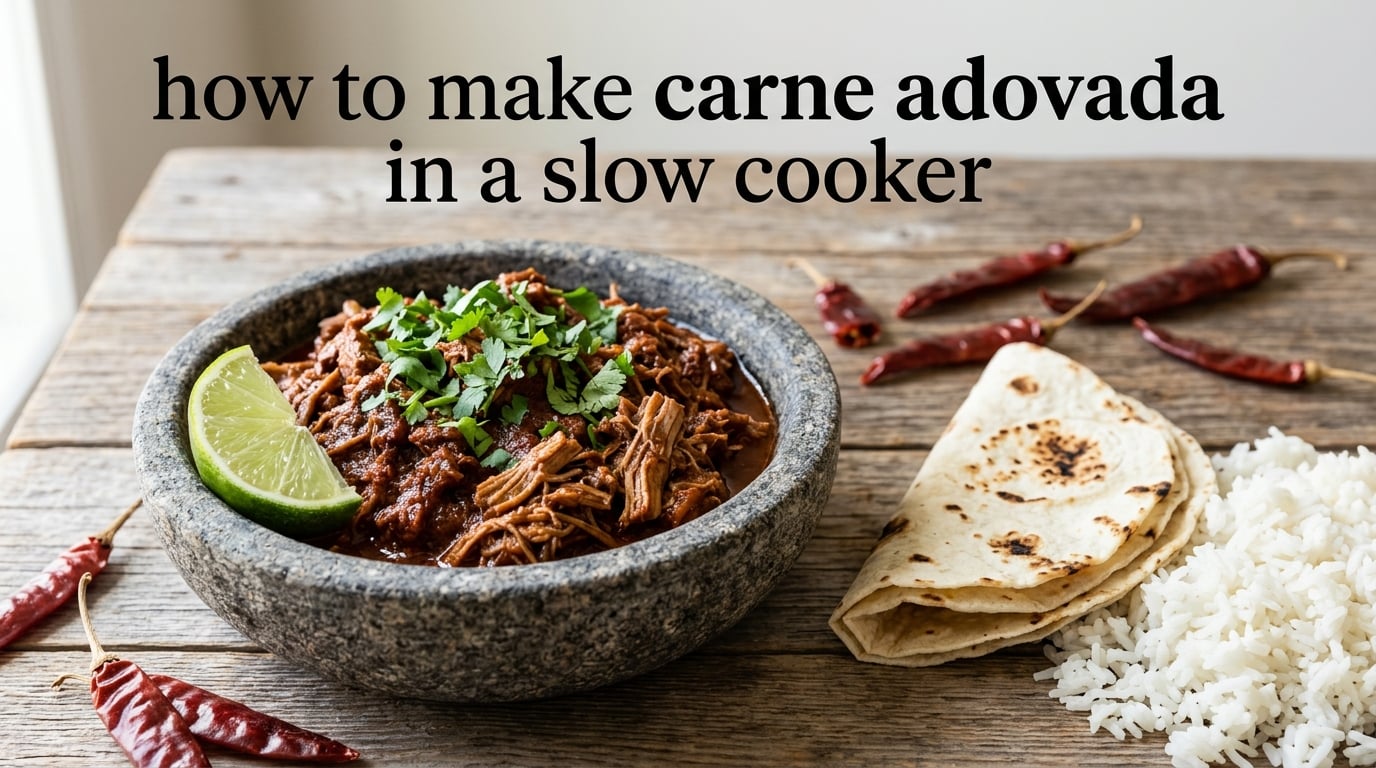
Learning how to make carne adovada in a slow cooker is mostly about one thing: the red chile sauce. Carne adovada is New Mexican for “marinated meat,” and the whole dish is built on pork shoulder braised in a sauce made from dried New Mexican chiles, garlic, onion, oregano, and a little liquid. A slow cooker does that braise for you while you are at work, and it costs you almost nothing in effort.
I have made this recipe dozens of times in a 6-quart crock pot, and the version below is the one I keep coming back to. The meat comes out spoon-tender, the sauce is thick enough to cling to a tortilla, and the whole pot feeds eight without a second side dish.
Two things decide whether the result tastes like restaurant adovada or like plain braised pork. First, marinate the pork in the chile sauce for 12 to 24 hours instead of an hour. Second, use genuine New Mexican red chiles or red chile powder, not a generic chili powder blend. Everything else is flexible.
This guide was tested and updated for 2026, and it covers the slow-cooker-specific questions most recipes skip: whether you have to brown the meat, which liquid to use, and how cook time changes with your cooker size.
Table of Contents
- What You Need for Slow Cooker Carne Adovada
- Before You Start: The Night-Before Prep
- How to Make Carne Adovada in a Slow Cooker, Step by Step
- Slow Cooker Times and Temperatures
- Should You Brown the Pork First?
- Choosing Your Braising Liquid
- Carne Adovada vs. Carne Adobada vs. Carne Asada
- Instant Pot and Stovetop Conversions
- Tips for the Best Slow Cooker Carne Adovada
- Troubleshooting Slow Cooker Carne Adovada
- How to Serve, Store, and Freeze Carne Adovada
- Frequently Asked Questions
- What cut of meat do you use for carne adovada?
- Can you put raw meat straight into a slow cooker?
- How long does carne adovada take in a slow cooker?
- What is the best liquid for slow cooking pork in carne adovada?
- Why is my carne adovada bitter?
- Do I need to marinate carne adovada?
- Can I make carne adovada in an Instant Pot?
- What is the difference between carne asada and carne adovada?
- Conclusion
What You Need for Slow Cooker Carne Adovada
The ingredient list is short, and almost every item is available at a regular supermarket outside the Southwest. The two things worth seeking out are dried New Mexican red chiles (or a red chile powder) and Mexican oregano.
Pork
- 3 pounds boneless pork shoulder, also sold as pork butt, cut into 1-inch chunks
- 2 tablespoons neutral oil, for searing (optional)
Red chile sauce
- 4 ounces dried New Mexican red chiles, about 8 to 10 pods (or 3 tablespoons red chile powder)
- 4 garlic cloves
- 1 small white onion, diced
- 1 tablespoon Mexican oregano
- 1 teaspoon cumin (optional, not traditional)
- 2 cups chicken broth, divided
- 2 tablespoons red wine vinegar
For serving
- Flour tortillas, warmed
- Cooked white rice, pinto beans, or refried beans
- Optional: chopped cilantro, diced white onion, lime wedges, crumbled Cotija, sour cream, pico de gallo
Choosing the pork
Use boneless pork shoulder or pork butt. That cut carries enough fat to stay moist through eight hours of low heat, and enough connective tissue to collapse into shreds. You do not have to cube the meat before it goes in the cooker; a whole roast also ends up fork-tender and shreddable, it just takes closer to the top end of the time range. Cut into 1-inch chunks when you want even doneness and a faster cook.
New Mexican red chiles, not chili powder
New Mexican red chiles are dried chiles with thin flesh and almost no heat, so the flavor is sweet, earthy, and smoky rather than hot. If you cannot find pods, look for red chile powder from the Chimayo or Hatch regions, or jars and frozen bricks of red chile sauce. A cup of frozen red chile sauce works too: cook it down with the broth and season it yourself.
Mexican oregano, not Mediterranean
Mexican oregano has a bright, citrusy, peppery note. Mediterranean oregano is the mint-family herb and tastes sweet and floral in this dish. If you only have Mediterranean, use half the amount.
Before You Start: The Night-Before Prep
The single biggest improvement to slow cooker carne adovada is giving the pork a real marinade. Twelve to 24 hours in the refrigerator is the sweet spot: long enough for the chile to penetrate, short enough that the meat is not sitting in salt for two full days.
- Toast the chiles: set the dried pods in a dry skillet over medium heat for 30 to 60 seconds per side until fragrant and pliable. Do not let them scorch.
- Stem and seed: pull the stem off each pod and shake out the loose seeds. Seeds add no flavor, only grit.
- Soak: cover the pods with hot water in a bowl for 20 to 30 minutes until soft.
- Blend: put the softened pods in a blender with the garlic, onion, oregano, 1 cup of the broth, and the red wine vinegar. Blend on high until completely smooth.
- Strain: press the puree through a sieve to catch the chile peels. This is the step that keeps the sauce from tasting gritty.
- Marinate: combine the sauce with the raw pork in a lidded container or zip bag, and refrigerate 12 to 24 hours.
Some cooks skip the soaking step entirely and simmer the chiles for 10 minutes in the broth instead, which works and saves ten minutes. Skipping the straining step is the one shortcut I would not take.
How to Make Carne Adovada in a Slow Cooker, Step by Step
Step 1: Build the red chile sauce
Toast, stem, seed, and soak the dried chiles as described above, then blend them smooth with the garlic, onion, oregano, one cup of broth, and the vinegar. Strain the puree through a fine sieve to remove the peels. Taste it: it should taste sweet and savory, not hot, because the heat in this dish builds over the long cook.
Step 2: Cut and marinate the pork
Trim the pork shoulder of any loose exterior fat and cut it into 1-inch chunks across the grain. Combine the meat with the entire chile sauce in a container that closes, and refrigerate for 12 to 24 hours. If you are short on time, one hour still works; you will just notice the flavor is more on the surface than throughout.
Step 3: Slow cook it
Transfer the pork and all the marinade into the slow cooker, no draining, no browning required. Cook on LOW for 8 to 10 hours, or on HIGH for 4 to 5 hours. Do not open the lid during the first six hours. Each opening drops the internal temperature and adds roughly 20 to 30 minutes to the cook.
Step 4: Shred and finish
The pork is done when it reaches 190 to 195 degrees F internally and shreds with no resistance from a fork. Skim the fat off the top of the sauce, then pull the meat into shreds with two forks and fold them back into the sauce. Taste and adjust salt, and add a splash of broth if the sauce has tightened past the consistency of loose gravy.
Let it rest on low for another 20 minutes before serving so the shredded meat absorbs the sauce. The finished dish is better on day two, which makes it ideal for deliberate cooking.
Slow Cooker Times and Temperatures
Most recipes disagree on cook time because they assume different cookers. Low on most 6-quart and 8-quart models sits between 190 and 205 degrees F, while high runs roughly 30 degrees hotter and cooks about twice as fast. Use the table below as your starting point, then trust the fork test over the clock.
| Cooker size | Setting | Approximate time | Notes |
|---|---|---|---|
| 6-quart | LOW | 8 to 10 hours | Best fit for a 3-pound batch with room for liquid |
| 6-quart | HIGH | 4 to 5 hours | Good option when you need it the same evening |
| 8-quart | LOW | 9 to 11 hours | Scale up to 4 to 5 pounds of pork in the same time |
| 8-quart | HIGH | 5 to 6 hours | Watch the bottom for scorching in the final hour |
| 4-quart | LOW or HIGH | 8 to 10 hours LOW | Only 2 pounds of pork fit properly; too little liquid means scorching |
Cut pork cooks faster than a whole roast. If you cubed the meat, check it at hour 7 on LOW. If you left it whole, plan for the full 10 to 11 hours.
Should You Brown the Pork First?
Yes, you can put raw meat straight into a slow cooker. It is safe as long as the pork reaches 160 degrees F, and a slow cooker held at its low or high setting for several hours will get there. You are not required to sear, and the marinated pork has plenty of flavor without it.
Searing does add a deeper, roasted note because it creates browned bits that the chile sauce then dissolves. It costs you about ten minutes and dirty pan cleanup. I brown the chunks in two batches when I have the energy, and skip it on busy weeknights; the difference is real but small compared with the marinade.
One caution: searing raises the surface temperature, not the food-safety profile. The safe endpoint is still a measured internal temperature of 160 degrees F, and for texture you want 190 to 195 degrees F.
Choosing Your Braising Liquid
Chicken broth is the most common choice and the one I recommend for a first attempt. It adds body without masking the chile. The liquid you pick changes the finished sauce more than most people expect, so it is worth being deliberate.
| Liquid | Amount | Result |
|---|---|---|
| Chicken broth | 1 to 2 cups | Balanced, savory, closest to restaurant adovada |
| Water | 2 cups | Purer chile flavor, thinner sauce, needs more salt |
| Red wine vinegar | 2 tablespoons in the sauce, plus 1 cup broth | The bright note that separates true adovada from adobo-style dishes |
| Apple cider vinegar | 2 tablespoons | Milder tang, slightly sweeter finish |
| Coffee | 1 cup, replacing half the broth | Adds roasted depth and natural sweetness; decaf works |
| Beer | 1 to 1.5 cups | Malty and earthy, similar to the coffee effect |
Whichever liquid you pick, keep the total at roughly 1.5 to 2 cups. Too little liquid is the leading cause of a scorched, thick sauce, because the slow cooker reduces it over a long cook.
Carne Adovada vs. Carne Adobada vs. Carne Asada
The names get mixed up constantly, and the mix-up explains why some home cooks find adovada disappointing. Here is the short version.
| Name | Translation | What it is |
|---|---|---|
| Carne adovada | Marinated meat | New Mexican red chile and pork, oregano, vinegar, no cumin or cloves |
| Carne adobada | Meat with adobo | Usually the same dish made with a chipotle-based adobo sauce |
| Carne asada | Grilled or roasted meat | Mexican grilled beef or steak, not a red chile stew |
New Mexican adovada is built on dried red chiles and oregano, and it is mild compared with most adobo. Cumin, cloves, and cinnamon belong to adobo marinades, not to a true adovada.
Instant Pot and Stovetop Conversions
If you do not own a slow cooker, a pressure cooker gets you the same result in about 40 minutes of cooking. Brown the marinated pork for 3 minutes, add the chile sauce and broth, seal, and cook on high pressure for 40 minutes with a natural release. A stovetop pot or Dutch oven needs 2.5 to 3 hours at a bare simmer with the lid slightly ajar.
Both paths need the same internal temperature check. Loosen the sauce with broth afterward if the pressure cooker reduced it faster than you expected.
Tips for the Best Slow Cooker Carne Adovada
- Marinate for 12 to 24 hours, not 20 minutes. This is the difference between adovada and pork in sauce.
- Strain the chile puree through a sieve to remove every peel. Grit and bitterness both come from the skins.
- Toast the chiles only until fragrant. A scorched chile turns bitter no matter how long you braise.
- Keep the lid closed for the first six hours on LOW.
- Shred with two forks and fold the shreds back into the sauce, rather than serving large cubes.
- Add diced potatoes during the last two hours if you want to stretch the batch; they cook in the sauce and thicken it.
- Use a splash of red wine vinegar at the end if the flavor tastes flat.
- Let it sit on low for 20 minutes before serving so the shredded meat drinks up the sauce.
Troubleshooting Slow Cooker Carne Adovada
My sauce is bitter
You burned the chiles during toasting, or you left seeds and some pith in the puree. Stir in a tablespoon of honey, add a half cup of broth, and let it simmer uncovered for 20 minutes. Next time, toast for 30 seconds per side instead of a full minute.
There is grit in the sauce
That is chile peel. Pass the finished sauce through a fine sieve before serving, or blend again at high speed. Straining the puree before the cook, not after, gives the cleaner result.
The meat is still tough
It needs more time, not more heat. Give it another hour and a half on LOW. A high setting for short bursts toughens the exterior without softening the connective tissue, so resist the urge to crank it up.
The sauce is too thin or too thick
For thin sauce, remove the lid for the last 30 minutes to let it reduce. For thick sauce, stir in broth a quarter cup at a time until it falls off the spoon like loose gravy. A teaspoon of cornstarch whisked into a cold cup of broth also works when you need it thick right now.
It is too hot
New Mexican red chiles are mild, so heat usually comes from adding a chipotle in adobo sauce. Serve with sour cream, cheese, or a cooling pico de gallo, and use a small amount of the adobo next time rather than the whole can.
How to Serve, Store, and Freeze Carne Adovada
Adovada is genuinely a main dish, not a component. The most common service is over rice or beans, with warmed flour tortillas alongside, but the shredded pork works anywhere a filling goes.
- Breakfast burrito: shredded adovada, scrambled egg, diced potato or hash brown, green chile, wrapped in a flour tortilla
- Burrito for freezing: half cup of adovada plus shredded cheese on a flour tortilla, wrapped in foil or freezer paper
- Over rice with pinto beans, red onion, cilantro, and lime
- Topped on fried eggs for a simple breakfast
- Straight from the bowl over tortilla chips with sour cream and hot sauce
- As taco filling with pickled onion and cilantro
Refrigerate cooked adovada in a sealed container for 3 to 4 days and reheat it gently with a splash of broth. It freezes well for 3 to 6 months in a freezer bag pressed flat, or as individual burritos. Thaw overnight in the refrigerator and warm in a skillet, microwave, or oven at 350 degrees F until the cheese melts.
If you like a leaner version, use pork loin and shorten the cook to 6 to 7 hours on LOW, checking that the internal temperature reaches 190 degrees F. The tradeoff is less marbling, so the sauce needs an extra splash of broth at the end.
Frequently Asked Questions
What cut of meat do you use for carne adovada?
Use boneless pork shoulder or pork butt, which is the same cut under a different name. The fat and connective tissue in that cut keep it moist through eight hours of low heat and let it shred into strands. Cut it into 1-inch chunks for even cooking, or leave the roast whole and allow an extra hour or two. Pork loin works but is leaner and dries out faster.
Can you put raw meat straight into a slow cooker?
Yes. Raw pork goes straight into the slow cooker and stays safe as long as it reaches 160 degrees F internally, which a long cook easily achieves. Searing the chunks first adds a deeper roasted flavor by creating browned bits, but it is not required for safety or for the finished texture. If you skip it, give the sauce a little extra salt.
How long does carne adovada take in a slow cooker?
Plan on 8 to 10 hours on LOW or 4 to 5 hours on HIGH for a 6-quart cooker with 3 pounds of cubed pork shoulder. An 8-quart cooker with a larger or whole roast runs closer to 9 to 11 hours on LOW. The meat is done at 190 to 195 degrees F and shreds easily, so trust the fork over the clock.
What is the best liquid for slow cooking pork in carne adovada?
Chicken broth is the best all-around choice, adding body without hiding the chile. Water gives a purer chile flavor but a thinner sauce that needs more salt. Coffee or beer swap in for half the broth when you want roasted depth, and two tablespoons of red wine vinegar brighten the finished sauce. Keep total liquid between 1.5 and 2 cups.
Why is my carne adovada bitter?
Bitterness almost always comes from scorched chiles during toasting, or from seeds and pith left in the puree. Stir in a tablespoon of honey and a half cup of broth, then simmer uncovered for 20 minutes to soften the taste. Next time, toast the pods for only 30 seconds per side and press the puree through a sieve before it goes in the cooker.
Do I need to marinate carne adovada?
No, but a 12 to 24 hour marinade in the refrigerator is the single change that most improves the dish. The chile and vinegar penetrate the meat instead of sitting on the surface, and the salt starts seasoning the interior. An hour works in a pinch. You can also marinate the pork directly in the slow cooker insert, covered, for up to 24 hours in the refrigerator.
Can I make carne adovada in an Instant Pot?
Yes. Brown the marinated pork for 3 minutes, add the chile sauce and broth, seal the lid, and cook on high pressure for 40 minutes with a natural release. A stovetop Dutch oven takes 2.5 to 3 hours at a low simmer. Check the internal temperature for 190 degrees F and loosen the sauce with broth, since pressure cooking reduces it quickly.
What is the difference between carne asada and carne adovada?
Carne asada is grilled or roasted meat, usually beef steak, and it is not a stew. Carne adovada is a New Mexican braise of pork shoulder in a sauce made from dried red chiles, garlic, onion, Mexican oregano, and a little vinegar. Carne adobada is often the same dish made with a chipotle-based adobo sauce, which is spicier and includes cumin and cloves that do not belong in a true adovada.
Conclusion
How to make carne adovada in a slow cooker comes down to a short list: real red chile, pork shoulder, a 12 to 24 hour marinade, and a long low cook until the meat hits 190 degrees F. Everything past that is adjustment, and the troubleshooting section covers the four problems cooks actually hit.
Make the batch a day ahead if you can. The flavor is better on day two, the shreds settle into the sauce properly after resting, and it turns into breakfast burritos faster than you expect. Updated and tested for 2026, this is the version our kitchen still uses.