
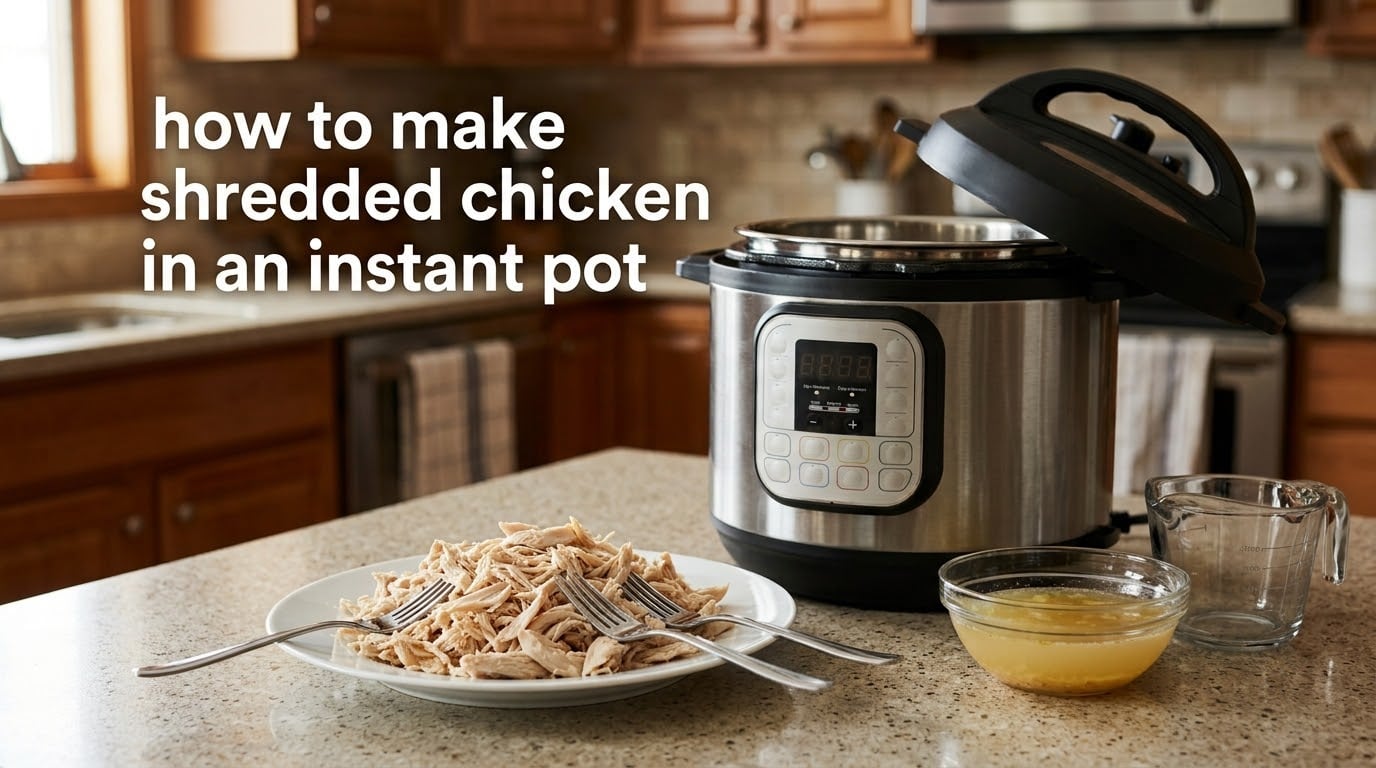
How to make shredded chicken in an instant pot takes about 25 minutes start to finish, and most of that clock time is the pressure cooker doing work while you do nothing. Set the chicken on HIGH pressure for 12 to 15 minutes, give it a 5 minute natural release, then pull it apart with two forks. One 1.5 to 2 pound batch becomes a week of tacos, salads, sandwiches, and soups.
I make this roughly once a week and the batch disappears fast. Once you own the cook time by cut and weight, the method stops being a recipe you look up and becomes a button sequence you run from memory. This guide covers the settings, the timing, and the handful of small decisions that decide whether the shreds turn out juicy or turn out chewy.
Updated for October 2026.
Table of Contents
- What You Need: Ingredients and Equipment
- Instant Pot Shredded Chicken Cook Times by Cut and Weight
- How to Make Shredded Chicken in an Instant Pot, Step by Step
- Natural Release vs Quick Release and Why the Order Matters
- How to Shred Chicken with Two Forks
- Chicken Cut Guide: Breasts vs Thighs vs Tenderloins
- Flavor Variations for One Base Batch
- Why Is My Instant Pot Shredded Chicken Rubbery?
- Food Safety: Internal Temperature and Handling
- How to Store and Freeze Shredded Chicken
- Ways to Use Shredded Chicken
- Frequently Asked Questions
- How long to set Instant Pot for shredded chicken?
- Why is my Instant Pot shredded chicken rubbery?
- How do I make pulled chicken in the Instant Pot?
- Is an Instant Pot good for shredding chicken?
- How to make the most tender shredded chicken?
- How to keep chicken moist in Instant Pot?
- How to cook shredded chicken without drying it out?
- Can you use frozen chicken in an Instant Pot?
- Should you use a trivet or put the chicken in the liquid?
- How much chicken can you cook in an Instant Pot at once?
- Final Thoughts
What You Need: Ingredients and Equipment
The ingredient list is short enough to memorize, which is why this method works well for beginners. Everything lives in one pot and there is no browning step to forget.
- Chicken: 1.5 to 2 pounds boneless skinless chicken breasts, or 2 pounds boneless skinless chicken thighs. Tenders work too, at a shorter cook time.
- Liquid: 1 cup chicken broth. Water works, but broth carries flavor into the meat and the cooking juices you will save for later.
- Seasoning: 2 teaspoons kosher salt, 1 teaspoon black pepper, 1 teaspoon smoked paprika, 1 teaspoon garlic powder, and 1 teaspoon onion powder. Lemon pepper seasoning is a straight swap if you prefer it brighter.
- Optional fat: 1 tablespoon olive oil or butter. Not required, but it seasons the pot base and reduces sticking.
- Equipment: an Instant Pot or any pressure cooker, a trivet or silicone rack, and two forks for shredding. A hand mixer on low does the shredding faster if you own one.
Everything except the shreds is optional to adjust. The two non-negotiables are the liquid and the chicken, because pressure cooking without liquid cannot work.
Instant Pot Shredded Chicken Cook Times by Cut and Weight
Cook times vary across recipes you will find online, and that is where most texture problems begin. The table below breaks the settings down by cut, weight, and whether the chicken is fresh or frozen. All times are on HIGH pressure with a natural release, and frozen chicken needs 2 extra minutes.
| Chicken cut | Weight | State | Pressure level | Cook time | Natural release |
|---|---|---|---|---|---|
| Boneless skinless breasts | 1 to 1.5 lb | Fresh or thawed | HIGH | 10 minutes | 5 minutes |
| Boneless skinless breasts | 1.5 to 2 lb | Fresh or thawed | HIGH | 12 minutes | 5 minutes |
| Boneless skinless breasts | 1.5 to 2 lb | Frozen | HIGH | 14 minutes | 5 minutes |
| Boneless skinless breasts | 2 to 3 lb | Fresh or thawed | HIGH | 15 minutes | 8 to 10 minutes |
| Boneless skinless thighs | 2 lb | Fresh or thawed | HIGH | 12 minutes | 5 minutes |
| Boneless skinless thighs | 2 lb | Frozen | HIGH | 14 minutes | 5 minutes |
| Chicken tenderloins | 1.5 lb | Fresh or thawed | HIGH | 6 minutes | 3 to 5 minutes |
| Chicken breast, bone-in | 2 to 3 lb | Fresh or thawed | HIGH | 15 minutes | 8 to 10 minutes |
Where you will see 15 minutes recommended across recipe sites is the top of the range for a full 3 pound batch of breasts. Where you will see 10 minutes is a smaller fresh batch. The roughly 6 minute per pound method that circulates in the pressure cooking community is a real approach, and it produces tender chicken, but it depends on a full natural release and a small batch, so I treat those times as a floor rather than a target.
How to Make Shredded Chicken in an Instant Pot, Step by Step
Follow these steps in order and you will get shreddable chicken on the first try. Note that the cooking timer does not include the time it takes to come up to pressure, which is usually about 5 minutes on its own.
- Pour in the liquid. Add 1 cup chicken broth to the pot. The chicken does not need to sit submerged, and you do not need more than a cup at the bottom of the pot.
- Season the pot base. Add 1 tablespoon olive oil or butter and half your seasoning. Cook on saute for 2 minutes so the spices bloom in the fat rather than sitting raw on metal.
- Season the chicken. Coat the chicken on all sides with the remaining salt, pepper, paprika, garlic powder, and onion powder. If you are freezing a plain base batch for later, season only lightly now and flavor each serving later.
- Nestle the chicken in. Set the pieces in the pot on the trivet, or directly in the broth if the pieces are large enough that you are not worried about them swimming. They will steam, not boil.
- Seal the lid. Set the pressure valve to the sealing position. On the Duo and Multi models that means the float pin is up. A venting lid will never come to pressure.
- Cook on HIGH. Use Pressure Cook or Manual mode at high pressure, not low. Set the time from the table above. Some models have a Poultry setting that does the same thing at 15 minutes.
- Let it rest 5 minutes naturally. Turn the pot to keep warm, or just let the float pin drop on its own. Opening the valve early is what makes chicken tough.
- Quick release. When the pin drops, turn the valve to venting and let the steam escape. Then open the lid away from your face.
- Shred. Move the chicken to a board or plate and pull it apart with two forks. Shred into large chunks rather than fine strands.
- Toss in the juices. Stir the shreds back into the cooking juices in the pot before serving or storing. This is the single best trick for keeping it moist.
Pulled chicken and shredded chicken are the same technique under two names, so if a recipe calls for pulled chicken in the Instant Pot, follow the steps above.
Natural Release vs Quick Release and Why the Order Matters
Natural release means you leave the valve in the sealing position after the timer ends and wait for the pressure to drop on its own. Quick release means you turn the valve to venting immediately to force the steam out.
Here is the part most recipes skip. During a natural release the pot stays at or near cooking temperature, and that residual heat keeps cooking the chicken. The cook time on the timer is not the total heat exposure. A 12 minute cook followed by a full natural release is closer to 18 to 20 minutes of cooking, which is why 12 minutes is plenty for 1.5 pounds of fresh breasts.
If you quick release right at the buzzer, the meat stops cooking when the steam leaves, and the fibers have not had time to relax. That is the most common reason Instant Pot chicken comes out chewy. Wait the 5 minutes first, then release.
Coming up to pressure takes about 5 minutes and is not part of your cook time. You will hear the working element hiss for several minutes, then the float pin will rise. If it never rises, check that the valve is set to sealing and that the silicone ring is seated in the lid.
If you already quick released and the chicken looks tough, put it back in the pot with a splash of broth, set it to keep warm or low pressure for 5 minutes, and let it relax. It will not return to the state of a correctly timed cook, but a 15 minute rest will soften it noticeably.
How to Shred Chicken with Two Forks
Two forks facing opposite directions, one anchored and one pulling, is all you need. Pin the meat with one fork and scrape with the other, working along the grain.
Shred into large chunks instead of fine strands. Fine shreds turn dry and pasty in a burrito or a quesadilla because there is more exposed surface, while large chunks hold together through reheating and still pull apart at the table. This is the single change that made the biggest difference for me.
Shredding warm versus cold is a real preference, not a rule. Shredding while the chicken is warm gives you long clean strands, but you are handling meat that just came off a boil, and the steam from the cooking juices can scuff your hands. Shredding after a 10 minute rest on a board is safer and nearly as clean. Shredding straight from the fridge produces the longest strands, and it is the approach I use for salad toppings and meal prep portions.
A hand mixer on low speed is the fastest tool for large batches. A community resource I read recommended exactly that approach, and I use a hand mixer for anything above 2 pounds. Stay on low, keep the beaters moving, and work in a deep bowl so the chicken cannot fly out.
Keep the cooking juices. Whatever is in the pot after the shreds go back in is a seasoned broth, and it is the easiest ingredient in the kitchen for soups, rice, or a pan sauce.
Chicken Cut Guide: Breasts vs Thighs vs Tenderloins
The cut you choose matters more than any other variable in this method. Breasts lean and dry out fastest, thighs carry fat and forgive mistakes, and tenderloins cook so quickly that they punish inattention.
| Cut | HIGH pressure time | Texture | Forgiveness | Best use |
|---|---|---|---|---|
| Chicken breast | 10 to 15 minutes | Lean, shreds clean | Low, dries if overcooked | Tacos, salads, meal prep base |
| Chicken thigh | 12 to 14 minutes | Moist, richer flavor | High, hard to overcook badly | Sandwiches, soups, pot pie |
| Chicken tenderloin | 6 minutes | Very tender, quick | Low, overcooks fast | Quick weeknight salads |
If you are cooking for the first time, use thighs. Most home cooks find breast results disappointing their first pass, and thighs hide a two minute error in a way breasts do not.
You can cook straight from frozen without thawing. Community users in the Facebook Instant Pot group do this regularly, and it works on the same principle as frozen chicken in a slow cooker. Add 2 minutes to the cook time, raise the pot so the chicken sits above the liquid, and expect it to take longer to come to pressure. Never cook a frozen solid block of breast flat in the broth, because the outside will overcook long before the center thaws.
Flavor Variations for One Base Batch
The useful move is cooking one plain batch and finishing each serving differently. Season the base batch lightly with salt, pepper, and garlic powder if you plan to freeze it, then add the signature flavor at the moment you eat.
| Flavor | Add after shredding | Works best on |
|---|---|---|
| Taco | 2 teaspoons taco seasoning, a squeeze of lime, chopped cilantro | Tacos, bowls, nachos |
| BBQ | 3 tablespoons barbecue sauce, 1 teaspoon smoked paprika | Sandwiches, sliders, wraps |
| Buffalo | 3 tablespoons buffalo sauce, 1 tablespoon butter, crumbled blue cheese | Wings, wraps, dips |
| Lemon herb | Zest of one lemon, 1 teaspoon lemon pepper seasoning, parsley | Salads, grain bowls, soups |
| Italian | 1 teaspoon oregano, garlic powder, 2 tablespoons parmesan | Pasta, subs, casseroles |
Over-seasoned base batches are a common regret. Salt concentrates as liquid evaporates during storage, so a batch seasoned heavily today can taste oversalted on day four. Season with intent and adjust per serving instead.
Why Is My Instant Pot Shredded Chicken Rubbery?
Rubbery texture is almost always one of four things. Work through them in order, because the cause decides the fix.
- You quick released at the buzzer. The fibers never got the rest period that relaxes them. Fix: 5 minutes natural release before the valve opens. This is the most common cause by a wide margin.
- You cooked too long. Beyond about 15 minutes on HIGH, breast muscle goes from tender to spongy. Fix: shorten the cook time by 2 to 3 minutes and lengthen the natural release instead. More time under pressure is worse than more time at rest.
- You used water instead of broth and skipped the juices. Fix: after shredding, return the chicken to the pot and let it sit in the juices for 5 minutes.
- You shredded it into fine strands. Fine shreds lose moisture faster and squeeze out liquid when you cook them further. Fix: shred into larger chunks.
Dry chicken has its own causes, and they overlap. Cooking on HIGH pressure with no liquid, or cooking a batch of lean breasts well past the tender point, are the two main ones. Add the liquid, respect the table, and choose thighs if dryness is a recurring problem for you.
Tough, chewy pieces that will not shred usually mean the cut is wrong for the method. Whole muscle breast cooked from frozen without enough time, or very large pieces cooked at the 10 minute setting, will stay intact. Cut the chicken into evenly sized 2 to 3 inch pieces before it goes in so everything finishes at the same moment.
Stringy shreds are a texture problem, not a cooking problem. They come from shredding across the grain instead of along it, or from a hand mixer left on medium or high. Slow down.
Bland chicken is a seasoning problem. Seasoning applied only before cooking lands on the outside of the meat. Toss the finished shreds with salt and a little of the cooking juice before serving, and keep acid in the dish, which makes under-seasoned food taste seasoned.
Food Safety: Internal Temperature and Handling
Check the thickest piece with an instant-read thermometer before you shred. Chicken is done at 165 degrees Fahrenheit, and pressure cooking regularly overshoots that, so verifying is a good habit even when the texture seems right.
Move the shreds to an airtight container within two hours of cooking. Refrigerate at or below 40 degrees, use within 3 to 5 days, and reheat until steaming hot all the way through. Reheat only the portion you are eating rather than the whole container, since repeated warming and cooling is what makes meal prep chicken dry.
How to Store and Freeze Shredded Chicken
Shredded chicken keeps better than whole cooked chicken because there is more surface area for moisture to escape, so cool it well and press out air before freezing.
| Method | Keeps | Notes |
|---|---|---|
| Airtight container, refrigerated | 3 to 5 days | Best quality, store broth separately if possible |
| Freezer bag or container | 2 to 3 months | Flatten the bag to speed freezing and prevent freezer burn |
| Portioned in 1 cup zip bags | 2 to 6 months | Thaw one bag at a time in the fridge overnight |
| Single serving portions | 2 to 6 months | Ideal for grab and go lunches, thaw in the fridge |
For a meal prep batch, cool the shreds, mix them with two tablespoons of broth so they stay moist, then portion into 1 cup bags that match one serving each. Thaw in the refrigerator overnight, never on the counter.
A pressure cooker makes this workflow easy. Run 2 pounds of frozen thighs in a single batch, shred, and portion once. A slow cooker gives a similar result on low for 6 to 7 hours, and a stovetop simmer needs 30 to 45 minutes with a lid on.
Ways to Use Shredded Chicken
One batch spreads across a week of meals if you finish it differently each time. Tacos and bowls take taco seasoning, burritos and quesadillas take a light sear in a dry skillet, and chicken salad or Caesar salad take lemon and herbs.
Soups, pot pie, and chili all welcome shreds stirred in at the end. Enchiladas and chimichangas use the same base batch with a different sauce, and club sandwiches or deli meat substitutes benefit from a thicker cut, so shred into larger chunks before assembling. Pasta and rice dishes take the shreds folded in with the cooking juice, which is why you should never drain that liquid.
Is an Instant Pot actually good for shredding? Yes. It is faster than a stovetop simmer and more hands-off than a slow cooker, and pressure cooking tenderizes muscle quickly. The one case where a slow cooker or a rotisserie is better is when you want to walk away for several hours, since the pressure cooker needs you nearby for the release.
Frequently Asked Questions
How long to set Instant Pot for shredded chicken?
Set the pot to Manual or Pressure Cook on HIGH pressure. Fresh or thawed boneless skinless chicken breasts need 10 minutes for 1 to 1.5 pounds and 12 minutes for 1.5 to 2 pounds. Frozen breasts need 2 extra minutes. Thighs take 12 minutes for 2 pounds and tenderloins only need 6. Always follow the cook time with a 5 minute natural release.
Why is my Instant Pot shredded chicken rubbery?
Rubbery chicken usually has one of four causes: you quick released at the buzzer instead of waiting, you cooked longer than about 15 minutes on HIGH, you used water instead of broth, or you shredded it into fine strands. The fix is a 5 minute natural release before venting, a slightly shorter cook time, a full cup of broth, and shredding into larger chunks.
How do I make pulled chicken in the Instant Pot?
Pulled chicken and shredded chicken are the same technique. Add 1 cup broth to the pot, nestle in 1.5 to 2 pounds of seasoned boneless skinless chicken, seal the lid, cook on HIGH for 12 minutes, rest 5 minutes naturally, quick release, then pull the meat apart with two forks and toss it in the cooking juices.
Is an Instant Pot good for shredding chicken?
Yes, it is one of the fastest ways to get shreddable chicken. Pressure cooking tenderizes lean breast in about 12 minutes compared with 30 to 45 minutes on a stovetop, and the residual heat during a natural release keeps softening the fibers. Choose a slow cooker or rotisserie instead if you want to walk away for hours.
How to make the most tender shredded chicken?
Use boneless skinless chicken thighs if tenderness matters most, since the added fat keeps them moist. Cook on HIGH for 12 minutes for a 2 pound batch, wait a full 5 minute natural release before venting, and shred into large chunks rather than fine strands. Returning the shreds to the hot cooking juices for 5 minutes adds noticeable moisture.
How to keep chicken moist in Instant Pot?
Use a full cup of liquid and keep the volume in the pot high enough that the chicken steams, about a cup for a 1.5 to 2 pound batch. The most effective trick is to shred the chicken in the pot rather than on a board, so the meat sits in its own juices. Shredding into large chunks also cuts the surface area that dries out.
How to cook shredded chicken without drying it out?
Shred into large chunks instead of fine strands, since more exposed surface loses more moisture. Skip the quick release and give the pot 5 minutes of natural release so the meat keeps steaming gently. If the chicken is already dry, return the shreds to the pot with a splash of broth and warm them for 5 minutes before serving.
Can you use frozen chicken in an Instant Pot?
Yes. Add 2 minutes to the cook time and keep the chicken raised above the liquid on the trivet so the underside does not overcook. Frozen chicken takes longer to come to pressure, usually 10 to 12 minutes instead of 5, and that time is not counted in the cook time. Never press a frozen solid block of breast flat into the broth.
Should you use a trivet or put the chicken in the liquid?
Either works. A wire trivet or silicone rack keeps the chicken raised so the heat reaches it evenly and the broth stays out of the meat, which is the cleaner method. Placing chicken directly in the broth works for large pieces and infuses more flavor, but break the pieces up so they are not all submerged. Both approaches use the same cook times.
How much chicken can you cook in an Instant Pot at once?
A 6 to 8 quart pot comfortably holds 2 to 3 pounds of boneless chicken breast with a cup of liquid, which is the practical limit before crowding reduces heat circulation. Bone-in pieces and thighs take up more room, so cook 2 pounds at a time. For more, run a second batch, since doubling the meat in one pot lengthens the come-to-pressure time and stacks the pieces too tightly.
Final Thoughts
How to make shredded chicken in an instant pot comes down to three numbers: HIGH pressure, 12 to 15 minutes depending on cut and weight, and a 5 minute natural release before you vent. Everything else in this guide is there to protect those three numbers from the mistakes that turn tender meat chewy.
Cook a 1.5 pound batch of thighs this week with a cup of broth and a light seasoning, shred it back into the juices, and portion half of it into 1 cup bags for the fridge and the freezer. Once you have a batch waiting, the rest is just finishing.